Roof Repairs
Repairs across Parramatta, where failing box gutters and brittle original terracotta cause most of the water damage.
Learn more →Tile roof restoration across Parramatta. Pressure clean, rebed and repoint ridge caps, replace broken tiles, seal and recoat. Free inspection, written quote.
Repairs across Parramatta, where failing box gutters and brittle original terracotta cause most of the water damage.
Learn more →Re-roofing Federation and inter-war homes across Parramatta, plus the rear additions built over them.
Learn more →Colorbond roofing across Parramatta and Merrylands, including low-pitch and skillion sections on additions.
Learn more →Box gutter, eaves gutter and downpipe work across Parramatta, the most common cause of ceiling damage on older homes here.
Learn more →Storm response across Parramatta and Granville after hail or heavy runoff, with a same-day make-safe where we can.
Learn more →Roof inspections and written reports across Parramatta for pre-purchase, strata and insurance use.
Learn more →A roof can be sound and still look finished. Across the post-war belt of Parramatta — Greystanes, Toongabbie, Pendle Hill, Merrylands, Guildford, Wentworthville — there are thousands of concrete tile roofs from the fifties through the seventies that have simply lost their surface. The tiles are intact. The colour has gone, lichen has taken the southern faces, and the ridge pointing is sitting in the gutter.
That is exactly what restoration is for. Call (02) 9090 4741 for a free inspection and we will tell you whether yours is a candidate.
The spray is the last stage and the least important one. A restoration that is only a coating will look excellent for two years and then fail at the ridges, because nothing structural was addressed. The work that matters happens before anyone picks up a gun.
Skipping any of 4 through 7 is how a cheap restoration quote gets cheap.
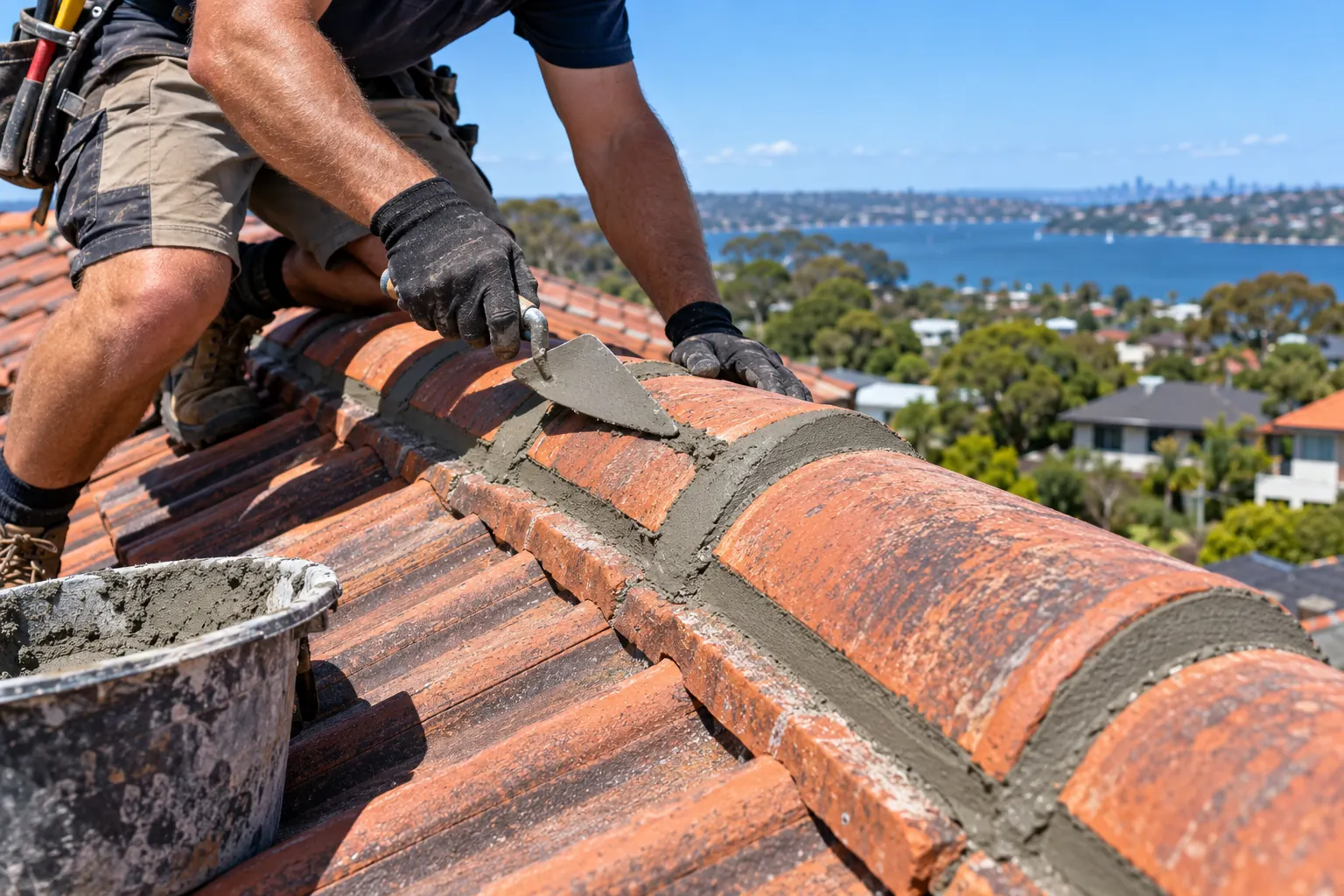
Parramatta sits on the Cumberland Plain, where the soils weathered from Wianamatta Group shale are moderately to highly reactive clays. They swell through a wet winter and shrink back through a dry summer, and residential sites on them are commonly classified M or H1 under AS 2870. The whole house moves a little, every year, on a cycle.
Rigid mortar pointing has no tolerance for that. It cracks, lets go in sections, and once there is a gap the wind drives rain straight under the capping and into the roof space. Flexible pointing compound is formulated to flex with that seasonal movement and to bond to both the mortar bed and the tile. On a roof in this part of Sydney it is not an upgrade, it is the correct specification.
We would rather tell you this at the inspection than halfway through the job:
They restore differently and anyone quoting them identically has not looked properly.
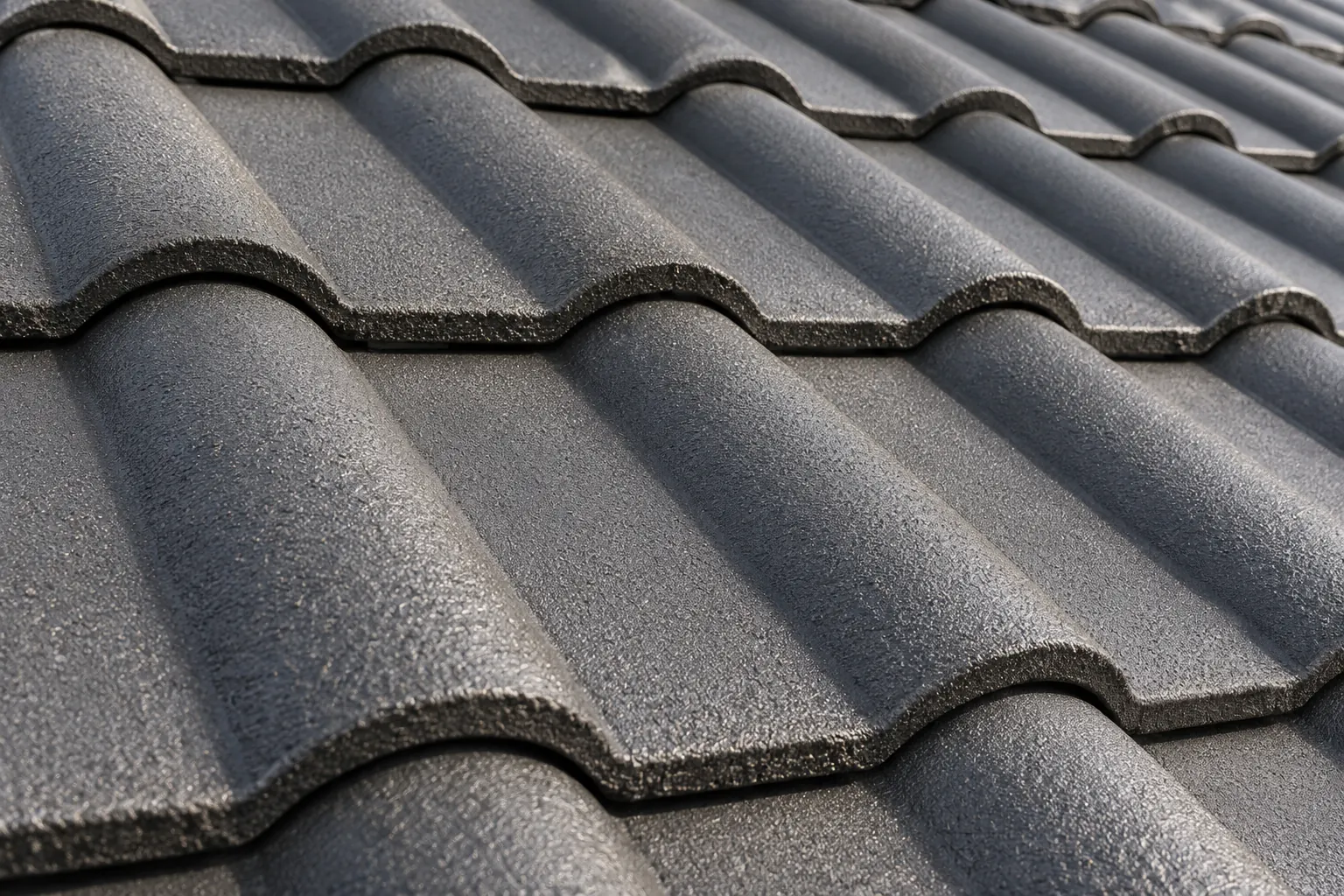
Concrete tile is the standard restoration candidate. The surface slurry wears off, the tile beneath is still structurally fine, and a clean-seal-coat system genuinely renews it. Most of Parramatta's post-war stock is in this category.
Terracotta is fired clay and is not painted in the same way. A sound terracotta roof is usually best cleaned, re-pointed and left in its natural finish, with a clear or breathable sealer at most. Painting good terracotta is often a mistake — it changes the look of a Federation streetscape and it can trap moisture in the tile body. Through Harris Park, North Parramatta and Oatlands, where the terracotta roofs are the character of the street, that restraint matters.
If your home is in one of the 18 heritage conservation areas in the City of Parramatta — North Parramatta, Sorrell Street, South Parramatta, Experiment Farm, Harris Park West among them — be aware that changing the external appearance of a building generally needs Council consent, while genuine like-for-like maintenance is treated differently. Cleaning and repointing a terracotta roof in its original finish is a very different proposition to coating it a new colour. Ask Council, or Cumberland City Council on that side of the boundary, before you choose a colour.
Restoration is substantially cheaper than replacement, which is the whole point of it, but the range is still wide. What moves it:
We quote after the inspection, in writing, with the stages itemised so you can see what you are buying.
If the roof has gone grey, the ridges are losing mortar, or there is grit in the gutters after every storm, it is worth finding out where it sits on the repair-restore-replace line.
Call (02) 9090 4741 or send through some details and a photo. Free inspection, no obligation, right across the suburbs we cover. If it turns out to be a repair job rather than a restoration, we will tell you that and quote it accordingly.
On a concrete tile roof that grit is the tile surface washing away. The coloured cement slurry on the top face wears off over a few decades, and once it is gone the tile underneath is exposed, porous and absorbing water. It is the clearest sign a roof is ready for restoration, and also the point at which waiting another five years starts to cost you tiles rather than coating.
It can, and on a brittle roof it will. Terracotta that has been absorbing water for eighty years, or concrete tile that has already delaminated, does not take a 4000 psi lance well. The decision about what pressure is safe gets made on the roof, after someone has walked it and tapped a few tiles. If the honest answer is that the roof will not survive a clean, that is a replacement conversation, not a restoration one.
Bedding is the mortar bed the ridge and hip caps sit on. Pointing is the flexible compound finished over the join between the cap and the tiles. If the bed has crumbled and the caps rock when you touch them, they need rebedding and then repointing. If the bed is sound but the pointing has cracked and fallen out, repointing alone is enough. You should be told which one you are paying for.
The coating system typically carries its own manufacturer warranty, and the installation carries a written workmanship warranty. In practice the limiting factor around Parramatta is the pointing rather than the paint, because the reactive clay soils under the Cumberland Plain keep the house moving seasonally. Flexible pointing is designed for that movement; rigid mortar is not, which is why we do not use it.
Both the clean and the coating need dry weather and reasonable drying time between stages, so a long wet spell will stretch the job out. Winter in Parramatta is generally drier than late spring and summer, so it is often a better window than people assume. The thing that actually sets the timing is the forecast, not the month, and we will not spray a roof that is about to get rained on.
Tell us what you need and we'll get straight back to you. Prefer to talk? Call (02) 9090 4741 and speak to someone local.
Call (02) 9090 4741